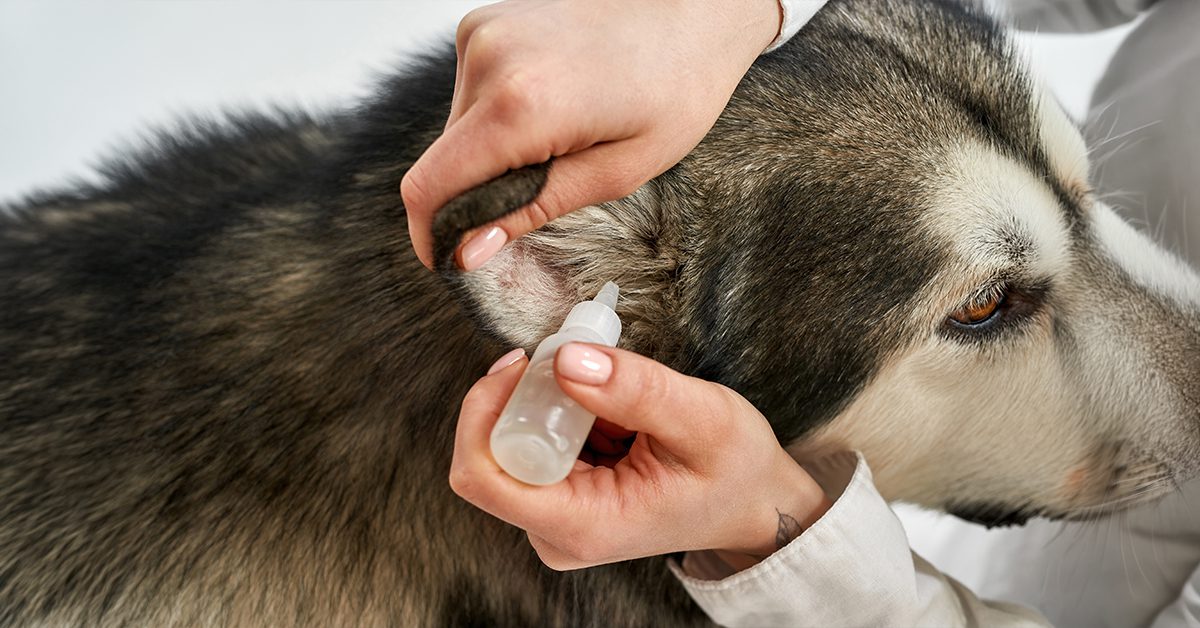
The safest and most effective way to treat a dog ear yeast infection is with a veterinary exam, where your veterinarian confirms the yeast under a microscope, cleans the ear canal, and prescribes an antifungal medication suited to your dog’s ear. Successful treatment also targets whatever allowed the yeast to overgrow, such as allergies or trapped moisture. Many owners search online for how to treat a dog ear yeast infection after noticing a musty smell or brown, waxy gunk in their pet’s ears. That instinct to help makes sense, but yeast infections often look similar to bacterial infections, ear mites, or even a foreign object stuck in the canal. Using the wrong product can delay healing or cause more pain. In this post, the team at Millis Animal Hospital explains why yeast takes hold, what professional treatment involves, and why human ear drops are not a safe shortcut.
Why Does Yeast Overgrow in a Dog’s Ear?
Yeast normally lives on your dog’s skin and inside the ear in small, harmless numbers. Problems start when the ear environment changes and gives that yeast room to multiply.
Meet Malassezia
The organism behind most canine ear yeast infections is called Malassezia pachydermatis. In a healthy ear, the immune system and the skin’s natural barrier hold it in check. When inflammation, extra wax, or warmth and humidity build up in the canal, the yeast population can surge and trigger itching, odor, and inflammation.
Common Triggers Behind the Overgrowth
Allergies sit at the top of the list. Dogs with food sensitivities or seasonal environmental allergies often develop inflamed ear canals, and that inflammation creates ideal conditions for yeast. Swimming and frequent bathing can leave lingering moisture, while floppy ears and narrow canals limit airflow. Hormonal disorders, such as hypothyroidism, and excess hair inside the canal may also contribute. Because these triggers vary from dog to dog, a single product rarely solves the problem for every pet.
Clues That Point Toward Yeast
Yeast infections often produce dark brown, greasy debris and a distinctive sweet or musty smell. The ear may look red and feel warm, and your dog may scratch or shake its head more than usual. Still, only testing can confirm yeast, since bacterial infections and mixed infections frequently share these signs. That overlap is the main reason any discussion of how to treat a dog ear yeast infection begins with a professional diagnosis.
How Veterinarians Treat a Dog Ear Yeast Infection
Professional treatment follows a clear sequence: confirm the cause, clean the canal, apply the right medication, and address the underlying trigger.
Confirming the Diagnosis
Your veterinarian will first look inside the ear with an otoscope to check the canal and confirm the eardrum is intact. Next, they collect a small swab of debris and examine it under a microscope. This test, called ear cytology, shows whether yeast, bacteria, or both are present and roughly how many organisms are involved. Knowing exactly what is growing guides every decision that follows.
Treatment Options Your Veterinarian May Recommend
Depending on the severity of the infection and your dog’s history, a treatment plan may include:
- An in-clinic ear cleaning to remove wax and debris so medication can reach the infected tissue
- Prescription ear medication containing an antifungal ingredient, often combined with an anti-inflammatory to ease swelling and itch
- Long-acting ear treatments applied at the clinic that work for days or weeks with fewer applications
- Oral antifungal medication for severe, widespread, or stubborn infections
- Medication to control pain and inflammation so your dog can rest comfortably
Addressing the Root Cause
Clearing the current infection is only part of the job. If allergies drive the problem, your veterinarian may discuss allergy testing, a diet trial, or long-term allergy management. Dogs with hormonal conditions may need bloodwork and ongoing treatment for that disorder. Tackling the underlying issue is often what separates a one-time infection from a cycle of repeat visits.
How Long Does Treatment Take?
Pet owners learning how to treat a dog ear yeast infection often want to know when their dog will feel better. Many dogs show less itching and head shaking within the first several days of starting prescribed medication. A full course of treatment commonly lasts one to several weeks, depending on how advanced the infection was and whether bacteria are also involved. Chronic or recurring cases with thickened ear canals may take longer to resolve. Following your veterinarian’s instructions for the entire course matters, even after the ear looks healthy again.
Recheck Appointments
Ears can look better before the yeast is fully gone. A recheck visit with repeat cytology lets your veterinarian confirm the infection has resolved before treatment stops.
Can You Use Human Ear Drops on Dogs?
No, you should not use human ear drops on your dog unless your veterinarian specifically directs you to. It may seem like a convenient fix, but human products are designed for a different ear and a different set of problems.
Why Human Ear Drops Fall Short
Several important differences make human ear drops a poor match for dogs:
- Most human ear drops target earwax or bacterial swimmer’s ear and contain no antifungal ingredient that would affect yeast
- Some ingredients can damage hearing or balance structures if a dog’s eardrum is torn or weakened
- A dog’s long, L-shaped ear canal holds debris that drops cannot reach without proper cleaning first
- Product strength and ingredients are formulated for humans, not for canine skin or body size
- Treating without a diagnosis can hide symptoms while the real problem worsens
The Problem With Home Remedies
Online advice often suggests vinegar, hydrogen peroxide, alcohol, or oils for yeasty ears. These remedies can sting inflamed skin, leave behind extra moisture, or irritate an ear that already hurts. If the eardrum is damaged, some liquids may cause additional harm. Even when a home remedy seems to calm things down for a few days, the infection often returns because the underlying cause never received attention.
What About Leftover Pet Medication?
Leftover ear medication from a previous infection may not be the right choice today. The organisms involved can differ from one episode to the next, and some products are unsafe if the eardrum is not intact. Always check with your veterinarian before reusing any medication.
Can Dog Ear Yeast Infections Be Prevented?
While no plan prevents every infection, many dogs experience fewer flare-ups once their risk factors are managed with veterinary guidance.
Prevention Topics to Discuss With Your Veterinarian
Ask your veterinary team about these strategies during your dog’s next visit:
- Whether routine ear cleaning makes sense for your dog and which product is appropriate
- How to dry the ears after swimming, especially for dogs that love local ponds and lakes
- Long-term allergy control options for dogs with seasonal or food-related flare-ups
- How often ear checks should be part of wellness exams for high-risk breeds
Watch for Early Warning Signs
Catching a flare-up early generally makes treatment simpler. A slight odor, a bit more head shaking, or extra scratching after a bath or swim can all signal that yeast is starting to rebound. Reaching out at the first sign of trouble often prevents a minor issue from becoming a painful, chronic one.
Get Relief for Your Dog’s Itchy Ears at Millis Animal Hospital
If you have been wondering how to treat a dog ear yeast infection, the answer starts with an accurate diagnosis and a plan built around your dog’s specific needs. Professional cleaning, the right antifungal medication, and attention to underlying triggers give your dog the best chance at lasting comfort. The veterinary team at Millis Animal Hospital cares for dogs from Millis, Medway, Medfield, Norfolk, and nearby communities, and we can examine your dog’s ears, run cytology, and create a treatment plan that fits your pet’s lifestyle. For dogs with recurring infections, we can also explore allergy management and other long-term solutions. Call Millis Animal Hospital at (508) 376-5317 to schedule an ear exam and help your dog leave the head shaking and scratching behind.

Recent Posts
About Us
Millis Animal Hospital is a privately owned AAHA-accredited, Cat-Friendly Certified practice staffed with Fear Free Certified professionals. We know a thing or two about treating pets and their families the way they deserve, with excellent preventive care and surgical services tailored to your individual needs.